
Jaden remembers his first day at Te Wairua Royal Oak as being incredibly overwhelming. He had arrived at Odyssey through the Alcohol and Other Drug Treatment Court (Drug Court), after a period of his life that included sleeping rough, challenges with alcohol and other drugs, and time in prison. Drug Court offered him the alternative pathway of rehabilitation, and he found himself living in a house with 16 other people and starting Odyssey’s residential treatment programme.
“I just put a lot of trust into the staff that were looking out for me, and my buddy who was looking out for me as well and showing me the ropes of the programme,” he says.
It took Jaden three attempts at Te Wairua before, as he puts it, he was ready to “fully surrender to the programme and give it my all”.
“In the earlier days, I kept wanting to take my own path,” he says.
Each time he left treatment, he ended up back in custody. Eventually he had to accept that doing things his own way wasn't working.
He found that surrendering to the programme didn't mean giving up, it meant being prepared to listen, accept help, and sit with being uncomfortable.
Life at Te Wairua is structured around the Therapeutic Community model where tāngata whai ora live and take part in the programme together, supporting and challenging one another. It includes a structured daily programme, increasing levels of responsibility, peer support and accountability.
Jaden began to recognise his own “blind spots”. Over time, he was also able to support newer members of the community through some of the same things he had struggled with when he first arrived.
Alongside this, Jaden received wrap-around support from Odyssey kaimahi, including those with their own lived experience of recovery. He was supported with both his addiction and challenges and his mental health, and learned practical ways to manage his emotions and reduce the risk of relapse. “I knew that I couldn't do ‘life’ without the programme. I needed support.”
It wasn’t easy. Jaden had to keep showing up, accept being challenged and learn to trust the people around him.
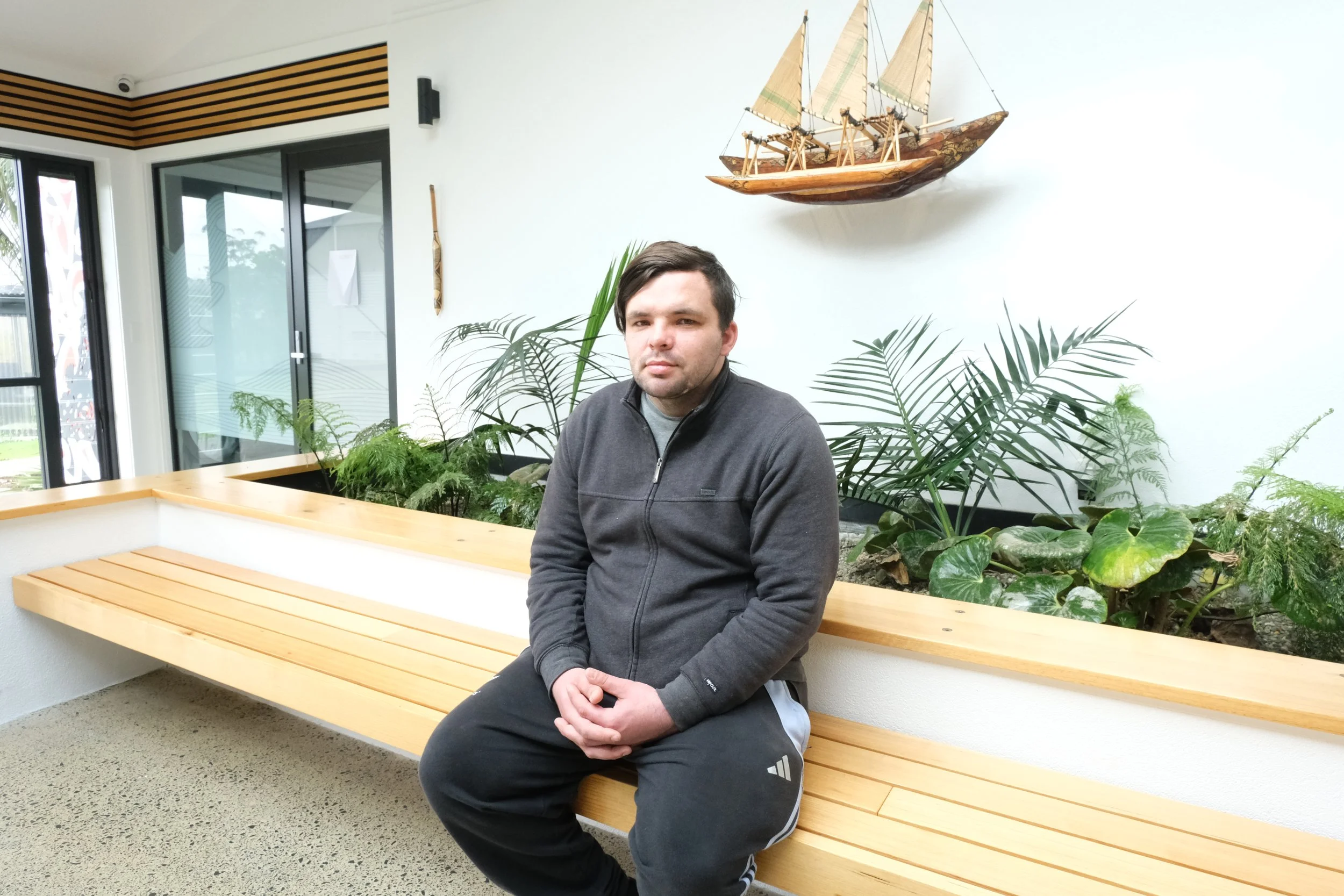
Drug Court also brought a different kind of experience of the justice system. It can offer treatment as an alternative pathway for people whose offending is linked to alcohol and other drug challenges, within a system of regular court appearances and accountability. Jaden had been appearing in the District Court since he was 18. This time, he says, the judge spoke directly with him, took an interest in how he was progressing and wanted to see him do well. “I wouldn't be sitting here if it wasn't for the Drug Court.”
Jaden has now finished the residential part of his programme and moved into a house in the community with others in recovery. “It hasn’t been easy reintegrating back out into the community, but it’s been something that I’m really thankful for.”
He is rebuilding some of the basic routines that were once missing from his life: getting up, having a shower, keeping a routine, and managing his daily responsibilities. When finding food and a place to sleep used to be a daily struggle, having those things now genuinely matters.
His weeks have also become busy. “My days are really full,” he explains. “I go and give back at Te Wairua most days alongside volunteering at church and Te Papa Rugby Club.” He is also studying towards the New Zealand Certificate in Health and Wellbeing (Peer Support, Level 4), while continuing to receive support from Odyssey and attending weekly group check-ins.
Accountability is still important to him. He wants people around him who will point out his blind spots, tell him when something isn't right, and hold him accountable.
He is also deliberately building connections outside Odyssey, part of his recovery capital: having people, knowledge, strengths and resources around him that he can draw on when life gets difficult.
Jaden's experiences have influenced what he would like to do next. Through his peer support study, he hopes to eventually work alongside people facing some of the same challenges he has experienced with alcohol or other drugs, mental health and the justice system.
“Somewhere down the track, I'll be able to support peers in their journey,” he says. “I want to help people and show people that it is actually possible.”
Jaden hasn’t finished Drug Court yet. He is looking forward to completing his sentence and reaching a point where courts, judges and probation are no longer part of his life. “I’m proud of how far I’ve come, just being able to wake up in the morning and be clean and sober,” he says. “I’m proud of all the work that I’ve done to get to where I am today.”
For now, there is study, rugby, church, volunteering, weekly check-ins and giving back at Te Wairua. And the work of adjusting to life outside residential treatment.
Asked what he would tell the Jaden who first arrived at Te Wairua, he says: “Just stick at it, it will get better. Life is waiting for you on the other side of the programme. Be willing to grab it with open arms and don’t let go of it.”
And his advice to someone struggling now is also direct. “You’re not doing this alone; there’s a whole lot of people on the same journey as you. Reach out and speak up when you are struggling. It’s a place where you can be yourself.”
Jaden knows he still has work ahead of him but says: “It’s like a second chance at life and I’m really grateful for that.”
He’s getting there.
For the clearest picture, select 1080p HD in the video’s settings.